Get expert concrete flooring in Markham that's crafted for durability and code adherence. We provide calibrated mix designs, tested consistency/aeration/thermal and moisture/pH/RH testing for consistent setting and adhesion. We handle surface preparation/diamond polishing to ICRI CSP, fissure/seam restoration, and fast-curing adhesion layers. Select honed concrete surfaces, epoxy/polyaspartic systems, or stained/dyed finishes with UV-stable sealers and certified floor measurements and layer dimensions. Our team confirms qualifications, assurances, and project duration to minimize hazards, expenditure, and operational impacts-next, see how sector-specific options fit your facility.
Main Insights
- Expert concrete flooring installations in Markham: featuring engineered mix designs, steel reinforcement, expansion joints, and proper curing aligned to building standards for consistent strength and lasting quality.
- Qualified contractors maintaining WSIB and liability protection, delivering thorough written project outlines, QC testing, warranties conforming to ASTM/CSA specifications, and reliable project timelines.
- Surface prep and moisture control: RH/pH testing, concrete surface profile, crack/joint repair, moisture barriers, and compatible primers for warranty-compliant installs.
- For polished, stained, or dyed concrete finishes, we provide comprehensive solutions including progressive grinding techniques, lithium densification, UV-stable protective coatings, non-slip treatment options, and sample demonstrations to ensure aesthetic satisfaction.
- We implement epoxy/polyaspartic solutions with exact mil thickness, vapor-blocking primers, slip-resistant aggregates, and documented FF/FL specifications for producing durable, minimal upkeep floor solutions.
Why Professional Concrete Flooring Matters in Markham
Although concrete seems straightforward, proper installation in Markham is crucial for load-bearing capabilities, surface evenness, moisture management, and overall lifecycle costs. You require a qualified contractor who precisely calibrates mixture formulation to accommodate slab dimensions, reinforcement requirements, and base requirements, then verifies slump characteristics, air entrainment, and temperature parameters for reliable curing. Professionals consider local weather patterns-including freeze-thaw cycles, de-icing materials, and humidity conditions-by specifying controlled air content, appropriate water-cement levels, and strategic joint placement.
Additionally, you avoid compliance risks. Expert teams interpret building codes, coordinate vapor barriers, reinforcements, and curing compounds, and track compaction and compressive strength tests. Precision finishing achieves FF/FL targets, minimizing trip hazards and racking issues. Proper drainage gradients and isolation joints avoid heaving and cracking. Simply put, professional methods safeguard structural reliability, lower callbacks, and extend service life.
Polished Concrete: Combining Beauty and Durability
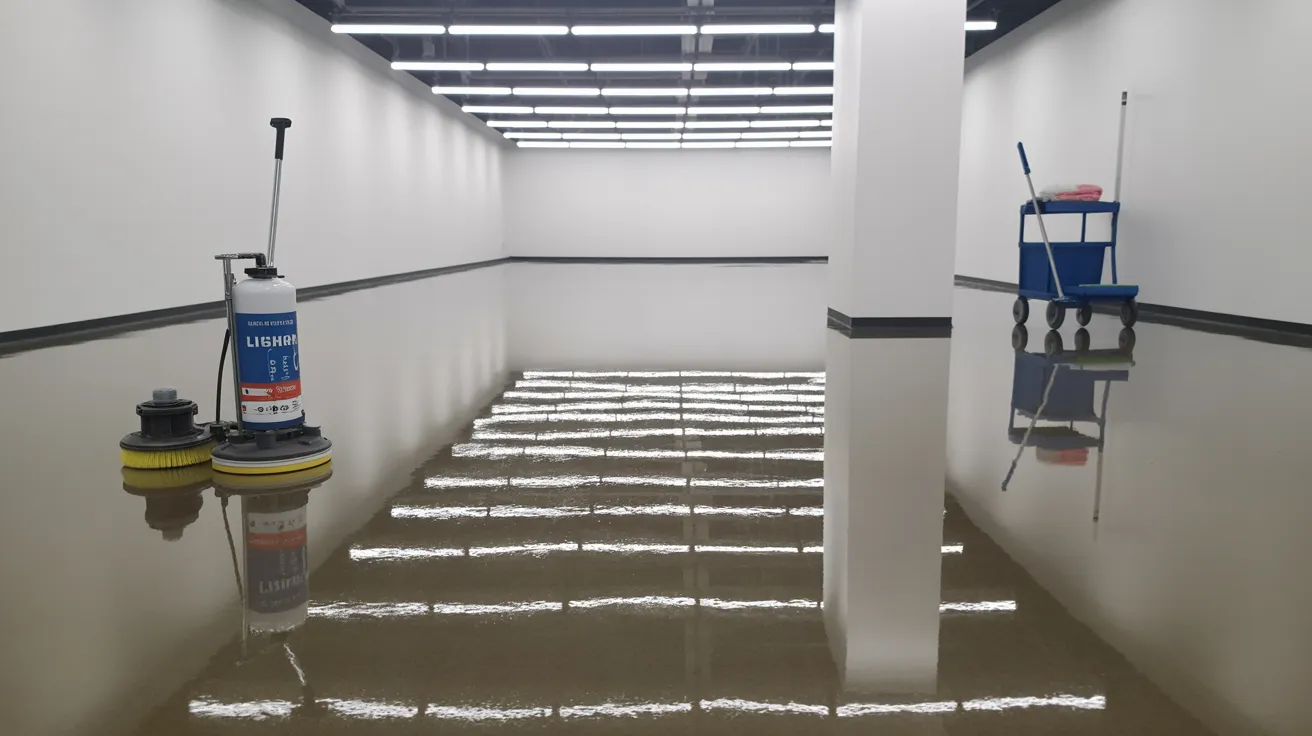
Upgrade functionality and appearance with polished concrete that delivers dense, dust-free, high-gloss floors engineered for traffic and uptime. You obtain a durable surface refined through progressive metal-bond grinding, resin honing, and lithium densification to maximize abrasion resistance and reduce porosity. We then seal and burnish to lock in strength and protection.
Achieve the gloss you desire-from low-gloss to high-shine results-while preserving slip resistance through varied aggregate exposure and precise light reflectivity control. This optimizes illumination efficiency, lowers maintenance, and simplifies cleaning procedures. Joints and surface imperfections are treated before finishing to eliminate early deterioration and surface marking.
Anticipate consistent lifecycle expenses, fast return-to-service, and simple compliance with cleanliness and particulate standards. A polished concrete surface ensures reliable performance without surface treatments, peel, or separation risk.
Professional Epoxy Solutions for Garages, Shops, and High-Traffic Spaces
You need epoxy coatings that hold up against wear and tear, tire marks, chemicals, salt exposure, and various solvents without degrading or discoloring. To attain that level of performance, you'll need to specify mechanical surface prep (using grinding or shot blasting), moisture and pH testing, and a compatible primer to secure proper bond strength. Then you'll need to apply the epoxy within the manufacturer's MVT limits, monitor coating thickness and curing periods, and complete with a UV-stable topcoat where traffic or sunlight exposure requires it.
Material Durability and Chemical Properties
When operations require a floor that will perform under load, epoxy coatings provide exceptional load-bearing capacity, durability against wear, and proven chemical resistance for industrial facilities, workshops, and busy walkways. You gain durability from strong molecular bonds within the bonded structure, resulting in impact resistance, dimensional stability, and extended service life. Epoxy resists hot-tire pickup, forklift traffic, and rolling loads without surface damage or deterioration.
Furthermore, you minimize degradation from numerous harmful substances like oils, coolants, and road treatments. The protective film blocks penetration, minimizing surface damage and separation when spills occur. Thermal cycling and moisture vapor are handled with minimal movement, maintaining bond integrity. Select solids content and resin-hardener ratios to suit environmental demands. With the right system, you lower maintenance costs, lengthen maintenance periods, and maintain continuous operation.
Surface Preparation and Application
Before epoxy performs effectively, substrate prep sets the performance ceiling. It's essential to check moisture levels, pH values, and tensile strength, then remove weak surface material and impurities. Execute surface preparation through mechanical preparation methods to reach the designated surface profile, creating a clean, porous surface. Address joints and cracks with semi-rigid fillers, and pay special attention to edge areas.
First seal porosity using fast-curing primers that can handle residual moisture and minimize recoat intervals. Apply broadcast method to saturation in areas non-slip properties or build must be achieved, then distribute the body coat using a roller or squeegee at the target thickness, keeping wet edge consistency and proper coverage. Monitor and adjust ambient and substrate temperatures, dew point, and ventilation. Complete with a UV-resistant topcoat for defense against wear, chemicals, and provide simple maintenance in garage environments and heavily trafficked areas.
Stained and Dyed Concrete for Custom Colors and Patterns
We can create a specific color palette using acid stains for variegated tones or liquid dyes for solid, even tones that meet your design requirements. We'll implement textural and design elements-saw‑cuts, stencils, layered applications, and controlled mottling-to create natural stone, tile patterns, or custom designs with uniform results. To lock in color and performance, we'll select the optimal sealer (polyaspartic, penetrating, or polyurethane), then set a care program with pH‑neutral cleaning and scheduled sealer applications according to wear.
Color Selection Options
Color is a key factor in concrete design, and stained and dyed applications yield accurate, reproducible effects. You select from standardized color palettes that align with brand standards or project palettes, then we validate with physical samples under your lighting. Acid stains generate variegated Earthy tones-sand, umber, slate-ideal for commercial, public, and retail environments seeking gentle illumination. Solvent and water-based dyes broaden into vibrant precious stone hues-jade, lapis, garnet-supporting bold wayfinding and premium merchandising.
We evaluate material characteristics including porosity, moisture levels, and cement composition to determine absorption, then define mixing ratios, contact duration, and application methods for consistency. UV-resistant sealants lock color, while surface finish adjustments control light reflection. You get color continuity across processes with documented mix ratios and production monitoring, ensuring consistent, maintainable results.
Texture and Pattern Effects
After establishing colors defined, pattern and texture serve as performance elements that guide flow, minimize glare, and brand areas. You can specify colored or stained concrete as the base color, then layer precise patterns to create measurable results. Linear scoring, machine-cut boundaries, and laser-cut designs establish navigation paths and product zones without supplementary elements. Impressed finishes offer anti-skid surface texture while mimicking stone, slate, or custom logos. Acid stains create natural effects; water-based dyes provide tight, reliable colors for crisp motifs.
We precisely layout movement corridors, loading zones, and retail spaces where surface patterns indicate motion and stopping zones. Non-reflective surfaces decrease brightness from LED systems, preventing camera flare and improving visual comfort. Border treatments and insertions match identity requirements, supporting durability, safety, and efficient installation.
Essential Care and Sealing Advice
Secure sustained performance by pairing the sealer with the coloring method, exposure requirements, and traffic classification. Choose penetrating sealers for vapor-transmissive, UV-stable stained surfaces; select high-solids polyurethanes or polyaspartics when abrasion and harsh substances are expected. Confirm VOC limits and slip coefficients. Prep thoroughly: maintain neutral pH after staining, perform 200-400 grit polishing if indicated, and apply within the manufacturer's specified recoat period.
Set up regular assessments to monitor finish quality, coating durability, and wear marks. Track wear spots at high-traffic zones and heavy-use areas; schedule targeted recoat prior to surface degradation. Implement a consistent spill management system: contain, absorb, treat, and clean - no acidic cleaners or undiluted degreasers. Use microfiber dust control, machine clean with pH-neutral detergent, and use sacrificial finish in heavy-use sections. Track maintenance data to improve lifecycle investment.
Best Practices for Surface Preparation and Moisture Mitigation
Before any coating or overlay can be applied, thorough surface preparation and moisture control dictate performance and warranty viability. Initial steps include performance testing: ASTM F2170 RH probe analysis, ASTM F1869 calcium chloride testing, and pH measurements. Next, eliminate contaminants, then execute substrate profiling to the specified ICRI CSP, using diamond grinding or shot blasting. Address cracks, spalls, and joints with suitable compounds, and completely vacuum to ensure a dust-free surface before the priming phase.
Handle moisture concerns from the start. Check vapor barriers beneath the slab exist and function; if barriers are non-existent or deteriorated, apply surface moisture control solutions matching your slab's vapor emission rates. Handle moving cracks and connections with elastomeric products to permit natural movement. Select primers based on epoxy or urethane appropriate for moisture circumstances. Track all readings, surface prep, and cure times to ensure compliance with manufacturer warranties and achieve reliable outcomes.
Business, Industrial, and Home Applications
Verified preparation and moisture regulation establish the groundwork for success across applications, but application priorities vary by application. In commercial settings, you must coordinate traffic patterns, visual identity, and long-term expenses. You choose eco-friendly materials for sustainability goals, densifiers for abrasion resistance, and surface treatments designed for traction control without compromising cleanability. You also consider heat-induced expansion at retail facades and light-filled spaces.
In manufacturing settings, you need to focus on impact resistance, chemical tolerance, and forklift traffic patterns. You methodically develop racking aisle joint configurations, calibrate structural reinforcement, and apply protective finishes that control heat-induced expansion from industrial processes. Noise reduction is essential near quality control areas and testing facilities.
In residential settings, we prioritize comfort and hassle-free care. You'll find sound-reducing underlayments, radiant-prepared base layers, and high-performance sealers that ensure safe footing while keeping a warm and inviting appearance.
Picking the Right Contractor: Qualifications, Guarantees, and Scheduling
When choosing a concrete flooring contractor in Markham, review experience and reliability with the same attention to detail you demand for mix designs. Ensure the contractor employs licensed installers, holds WSIB and liability insurance, and has manufacturer certifications for the required system (polished, epoxy, urethane-cement, or overlays). Verify project references with similar loads, exposure, and schedule constraints.
Require a detailed scope specifying: surface preparation, moisture mitigation, strengthening, positioning, final touches, and performance testing. Secure a warranty that details coverage, limitations, and response times; connect it to performance standards specifically structural integrity, surface uniformity (FF/FL), and surface coat measurement.
Assess schedule feasibility by checking: workforce planning, equipment readiness, cure time windows, and contingency planning for climate impacts and material shortages. Set up a documented issue resolution framework, chain of command contacts, and daily status reporting protocol.
Cost Analysis, Upkeep, and Long-Term Benefits
Once you have the scope, warranty, and schedule, align financial planning with lifecycle performance, rather than upfront costs. Evaluate installation expenses together with long-term cost considerations to incorporate structural requirements, reinforcement details, joint planning, curing processes, and coating systems. Specify finishes according to abrasion resistance, chemical resistance needs, and slip resistance factors to reduce premature failures.
Establish service intervals prior to pouring. Determine cleaning solutions, resealing schedules, and crack management methods to preserve gloss, color, and flatness tolerances. Calculate budget for grinding and polishing touch-ups, joint maintenance work, and humidity management where applicable.
Evaluate overall ownership expenses: energy efficiency (lighting cost savings), downtime periods for upkeep, and expected service life. Document warranty specifications associated with usage and environmental conditions. Calculate resale value by highlighting regulation-compliant surfaces, low pending maintenance, and transferable warranties. You'll minimize unforeseen spending and preserve property worth.
Popular Questions
Do You Provide Weekend and After-Hours Setup to Minimize Business Disruption?
Yes. You can schedule after-hours or weekend installation to reduce downtime. We arrange overnight scheduling and dispatch emergency teams as required, while phasing work to ensure access and safety. Our team manages curing procedures, noise reduction, and dust management to meet operational constraints. We provide thorough planning, site-specific staging, and quick deployment. You'll get status reports, quality assurance checks, and a documented handoff, ensuring your facility reopens on time with durable, compliant, and clean results.
Is It Possible to Install Underfloor Heating Into Concrete Floor Applications?
Indeed, you can integrate radiant floor heating with concrete flooring systems. Think of it as forging Excalibur: accuracy is crucial. You choose hydronic systems for spacious areas and optimal energy use, or electric mats for specific areas and quick heating. You coordinate slab thickness, insulation, vapor barriers, and control joints to safeguard tubing/cables. You verify load calculations, spacing, and installation patterns, then commission pressure and continuity tests, guaranteeing uniform heat, minimal thermal lag, and long-lasting performance.
What Are Your Eco-Friendly or Low-VOC Material Options?
You can choose eco-conscious solutions using low-volatile sealers, aqueous epoxies, and high-solid polyurethanes to lower VOC emissions and facility closure. Select blends with reclaimed materials, alternative binding materials (pulverized ash, slag), and nearby materials to reduce embodied carbon. Select lithium-silicate densifiers with ultra-low VOC profiles. Specify polished concrete to eliminate coating applications where practical. You'll get long-lasting, damage-resistant surfaces, conforming to LEED/WELL requirements, without compromising cure times, bond strength, or lifecycle performance.
Do You Manage Permits and Condominium Board Relations in Markham?
Yes, we provide permit assistance and condo coordination in Markham. You won't struggle with red tape; we handle applications, submit drawings, and follow approvals. We liaise with property managers, security, and boards to coordinate bylaws, noise windows, elevator bookings, and load limits. We deliver insurance certificates, WSIB, site-specific safety plans, and engineer letters as required. We get more info provide you with clear timelines, stakeholder updates, and documented compliance, ensuring your project proceeds as planned and inspection-ready.
Can You Match Existing Concrete Finishes During Partial Renovations?
Indeed, it's possible to match existing concrete finishes while undertaking partial renovations. Commence with a comprehensive assessment, performing mix design analysis, aggregate profiling, and finish calibration. Use color matching via dyes, pigments, or stains calibrated with test panels. Perform texture replication by implementing specialized troweling techniques, abrasive blasting textures, or micro-topping stamps. Regulate cure rates and gloss by applying hardeners and protective finishes. Verify with side-by-side mockups under project lighting to guarantee seamless integration.
In Conclusion
You want a floor that functions like clockwork-durable, clean, and precisely engineered. With epoxy, polished concrete, and staining solutions, you'll align aesthetics with load, traffic, and lifecycle. Careful surface prep and moisture mitigation avoid future complications. Review qualifications, guarantees, and timelines to maximize returns while minimizing risk. When you choose proven Markham specialists, you'll secure a finish that stands up to heavy use, harsh substances, and operational delays while minimizing maintenance and total cost of ownership for years.